
Effective cleaning is a fundamental requirement of sanitary processing, but achieving consistent results involves more than choosing the right cleaning chemicals or creating a cleaning schedule. The physical design of a processing system plays an important role in determining how... keep reading
Industrial, Fillable Gauges
At its core, a fillable pressure gauge operates on a straightforward principle: the measurement of pressure within a system. Unlike conventional pressure gauges, which typically utilize a Bourdon tube or diaphragm mechanism to gauge pressure, fillable pressure gauges feature a unique design. These gauges contain a chamber that can be filled with a suitable fluid, often glycerin or silicone oil, which then transmits pressure to the gauge mechanism. This fluid-filled system enhances accuracy, dampens vibration, and provides better resistance to fluctuations in pressure.
Read our blog post: Understanding Industrial Fillable Pressure Gauges: A Comprehensive Guide
Products
Showing all 5 resultsSorted by popularity
-
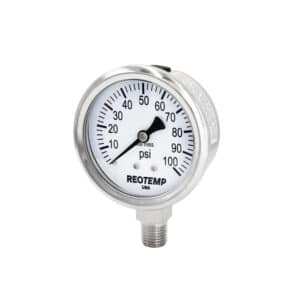
Reotemp® Stainless Steel Industrial Fillable Gauge with 2.5″ Dial (PM25C)
-
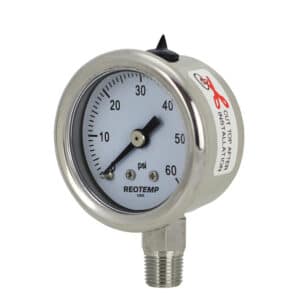
Reotemp® Stainless Steel Industrial Fillable Gauge with 1.5″ Dial (PM15C)
-
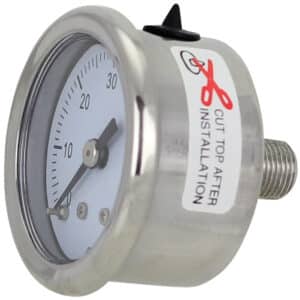
Reotemp® Stainless Steel Industrial Fillable Gauge with 2″ Dial (PM20C)
-
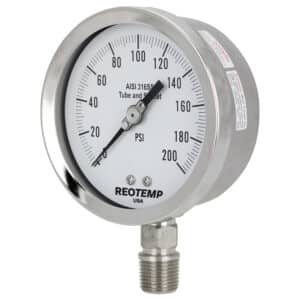
Reotemp® Stainless Steel Heavy Duty Repairable and Fillable Gauge with 4″ Dial (PR40S)
-
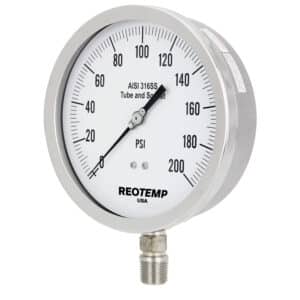
Reotemp® Stainless Steel Heavy Duty Repairable and Fillable Gauge with 6″ Dial (PR60S)
Related Blog Posts
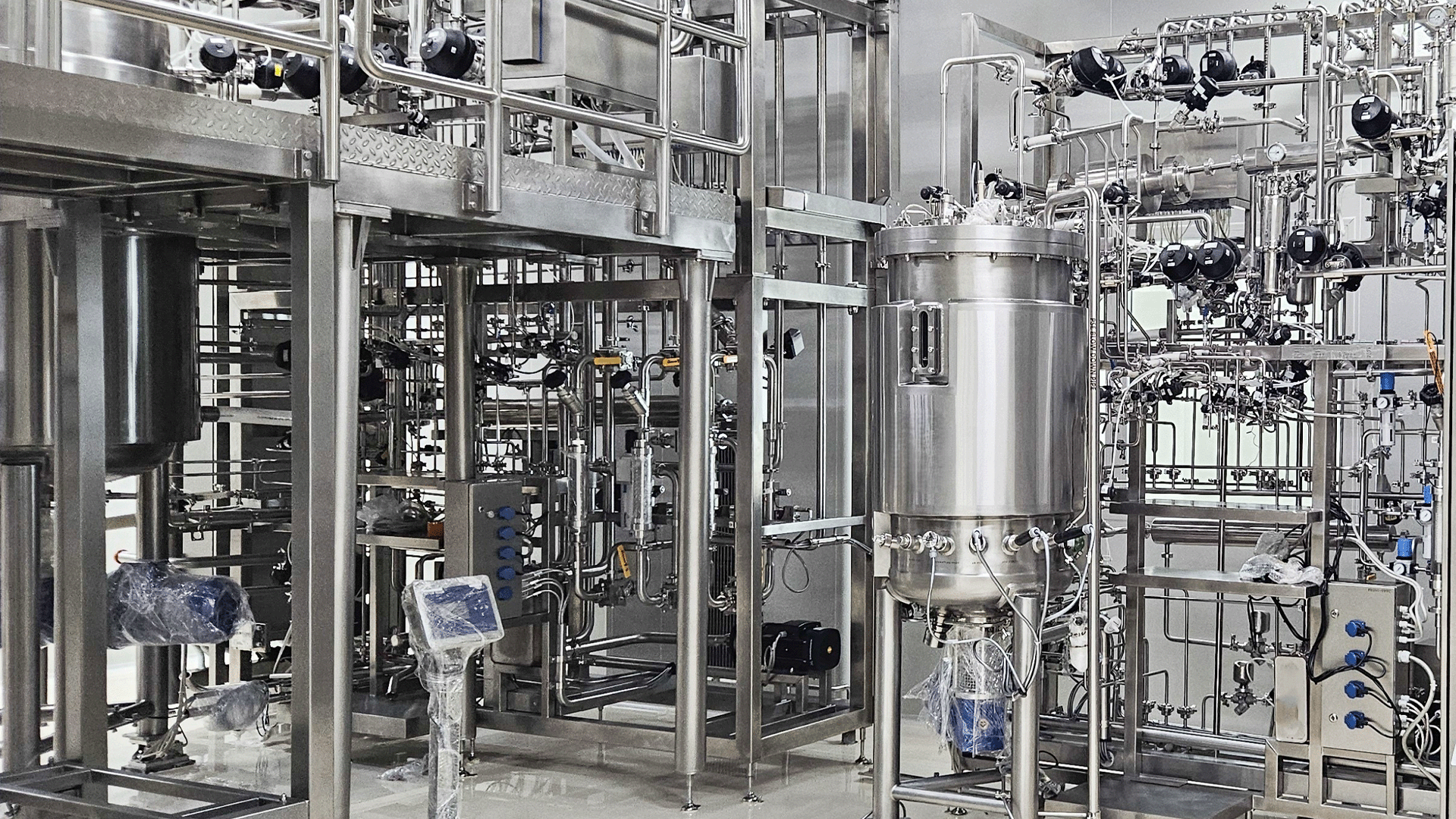
Designing Sanitary Systems for Repeatable Cleaning (and why it matters)
How Seasonal Temperature Changes May Affect Your Equipment
Seasonal temperature changes can influence sanitary process equipment even when the process itself operates under controlled conditions. Now, we aren’t talking about a sanitary facility being outside or directly affected by the outside weather, but even ambient temperatures may change... keep reading
Why Traceability Matters in Sanitary Processing
In sanitary processing, documentation is more than just paperwork. It’s the record of what was installed, where it was used, and how it was maintained. Good documentation and traceability can help teams make better decisions when uptime is on the... keep reading