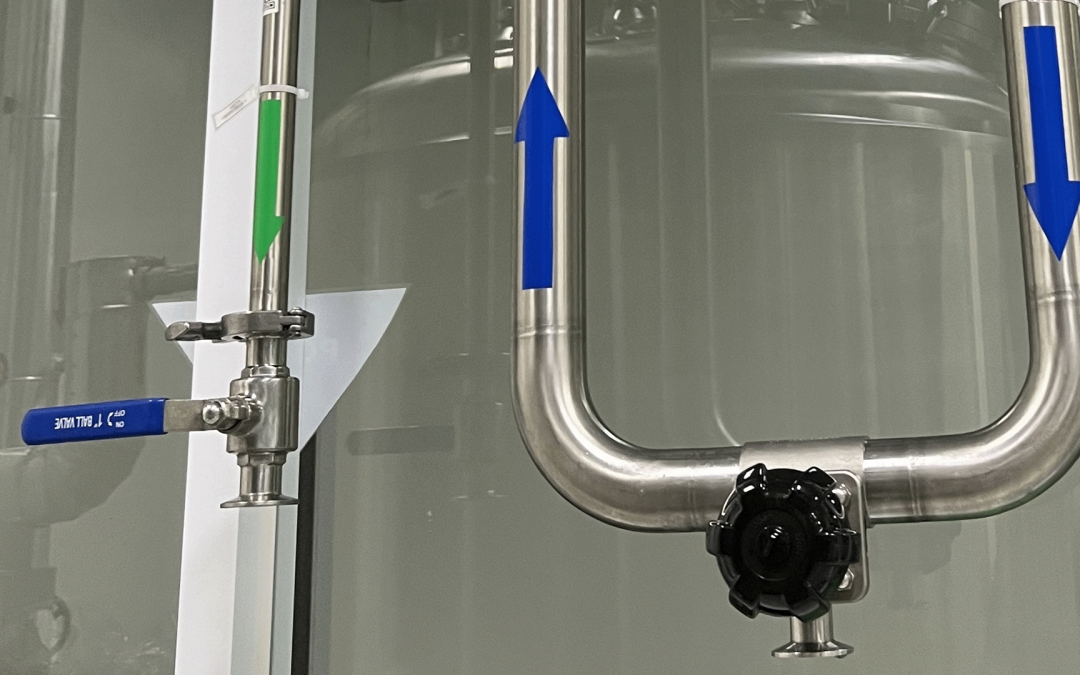
Thermal Expansion in Sanitary Process Tubing Thermal expansion is easy to overlook because stainless sanitary tubing feels rigid and “fixed” once it’s installed. But when a line heats up during SIP,...
Our team will be out of the office on Monday, May 25th. Orders placed during this time will be processed when we return.
Thermal Expansion in Sanitary Process Tubing Thermal expansion is easy to overlook because stainless sanitary tubing feels rigid and “fixed” once it’s installed. But when a line heats up during SIP,...
Why sanitary surface finish matters In hygienic processing, surface finish is not about looks. It is about how easily a surface releases product, cleans during CIP, and resists microbial attachment...
Surface finish is one of those specs that can look simple on a drawing but cause real-world headaches when it is misunderstood. In sanitary processing, finish impacts cleanability, microbial...
Choosing between 304 and 316L stainless steel is rarely about “better” and more about the environment your equipment actually sees: chlorides, cleaners, temperature swings, weld density, and how...
Rouge formation near stainless steel welds shows up as a reddish, orange, or brown discoloration (sometimes with a fine powdery film) concentrated in and around the heat-affected zone and can...
“Rouge” and “rust” can look similar at a glance because both can appear red, orange, or brown. In sanitary stainless systems, though, they usually point to different surface chemistry and different...
Leaks in sanitary process systems are more than a housekeeping problem. They can introduce contamination risk, cause unplanned downtime, create slip hazards, and complicate CIP validation. The good...